
Dota 2 and Esports – The Rise of Competitive Gaming
Dota 2 is more than just a multiplayer online battle arena (MOBA) game—it’s one of the most influential esports titles in history. Developed by Valve Corporation, Dota 2 has transformed competitive gaming through its strategic gameplay, massive prize pools, and passionate global community.
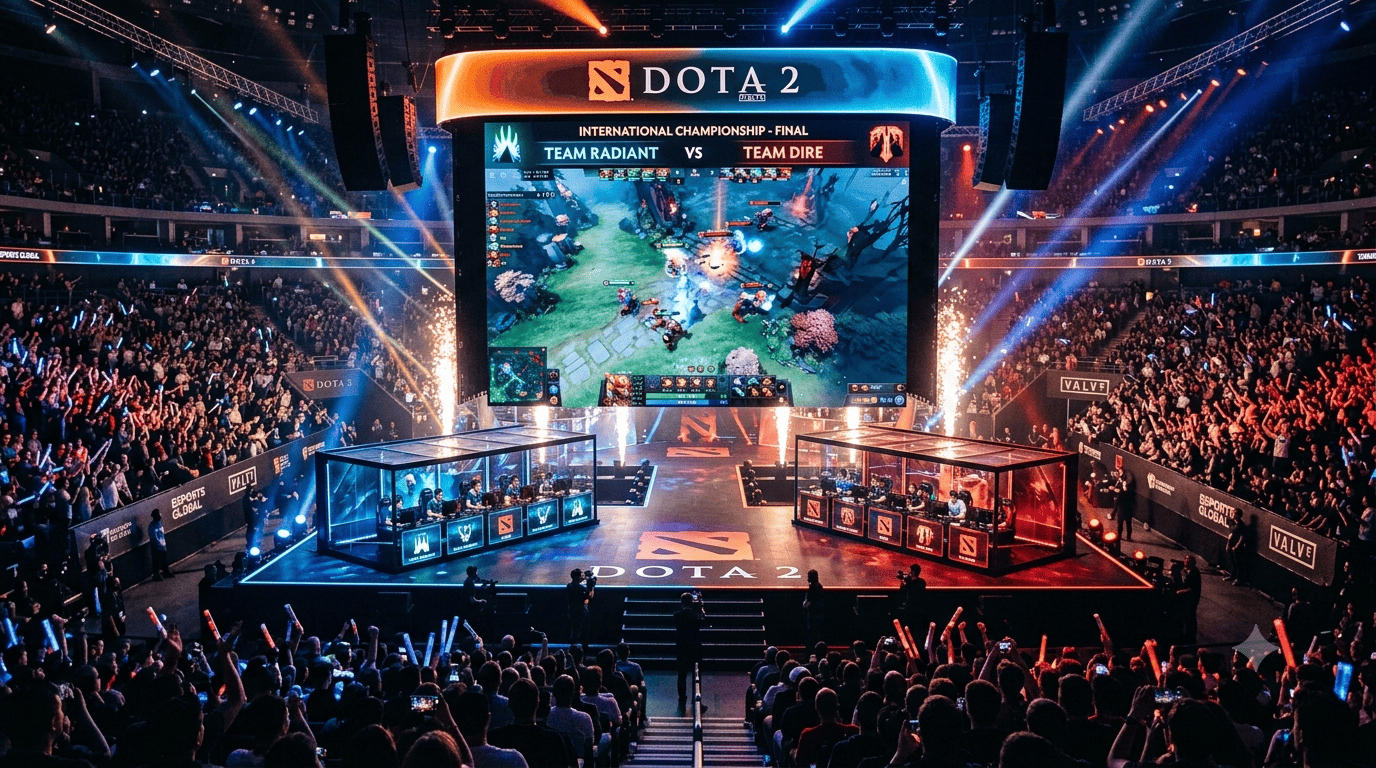
Since its official release in 2013, Dota 2 has become a cornerstone of the esports industry, attracting millions of players and viewers worldwide. Major tournaments such as The International (TI) regularly offer multi-million-dollar prize pools, making Dota 2 one of the highest-paying esports in the world.
Whether you’re new to esports or an experienced fan, understanding Dota 2 provides valuable insight into how competitive gaming has evolved into a global phenomenon.
Key Takeaways
- One of the world’s leading MOBA esports games
- Developed and published by Valve Corporation
- Features over 120 unique heroes
- Home to The International (TI), one of esports’ largest tournaments
- Requires teamwork, strategy, and mechanical skill
- Supported by a thriving global professional scene
- Popular across Southeast Asia, Europe, China, and the Americas
What Is Dota 2?
Dota 2 is a free-to-play Multiplayer Online Battle Arena (MOBA) game where two teams of five players compete to destroy the opposing team’s Ancient, the main structure located inside each team’s base.
Every player selects a unique hero with distinct abilities, strengths, and weaknesses. Success depends on teamwork, communication, map awareness, item builds, and strategic decision-making rather than individual skill alone.
Unlike many action games, Dota 2 rewards planning, coordination, and adaptability, making every match unique.
The History of Dota 2
Dota 2 traces its roots back to the original Defense of the Ancients (DotA), a custom game mod created for Warcraft III in the early 2000s.
Recognizing the popularity of the mod, Valve hired key developers from the original DotA community and began creating a standalone version.
Important milestones include:
- 2003 – Original DotA mod released for Warcraft III.
- 2009 – Valve begins development of Dota 2.
- 2011 – Dota 2 debuts at Gamescom with the first International tournament.
- 2013 – Official public release on Steam.
- Present – Millions of active players worldwide with a thriving esports ecosystem.
Today, Dota 2 remains one of Steam’s most-played games and continues to receive regular updates, hero reworks, gameplay changes, and seasonal events.
How Dota 2 Became an Esports Giant
Dota 2’s competitive nature made it a perfect fit for esports.
Several factors contributed to its success:
Massive Prize Pools
Valve introduced crowdfunding through the Battle Pass, allowing players to contribute directly to tournament prize pools.
This innovation helped create record-breaking prize money, with several editions of The International offering more than USD 30 million in total prizes.
High Skill Ceiling
Every match demands:
- Team coordination
- Hero mastery
- Draft strategy
- Item management
- Objective control
- Tactical decision-making
This complexity makes professional matches exciting to watch and rewarding to master.
Regular International Competition
Professional teams compete throughout the year in regional leagues, qualifiers, and international tournaments, creating a structured competitive ecosystem.
The International (TI)
The International (TI) is Dota 2’s premier annual championship and one of the most prestigious events in esports.
Teams from around the world compete for the coveted Aegis of Champions, with millions of dollars in prize money and global recognition at stake.
TI is known for:
- Elite competition
- Innovative hero strategies
- Record-breaking prize pools
- Millions of online viewers
Winning The International is considered one of the greatest achievements in professional esports.
Major Dota 2 Esports Tournaments
Beyond The International, several prestigious events shape the competitive calendar.
ESL One
A long-running tournament series featuring top international teams and large live audiences.
DreamLeague
Known for its high production quality and elite competition.
PGL Events
Hosts major Dota 2 championships featuring the world’s best players.
Regional Leagues
Professional teams compete throughout regions including:
- Southeast Asia (SEA)
- Western Europe
- Eastern Europe
- China
- North America
- South America
These leagues help determine qualification for major international tournaments.
Popular Professional Dota 2 Teams
Over the years, many organizations have become legends within Dota 2 esports.
Some of the most successful include:
- Team Liquid
- Team Spirit
- OG
- Gaimin Gladiators
- Tundra Esports
- Team Falcons
- BetBoom Team
- PARIVISION
These teams regularly compete at the highest level and have built loyal fan communities worldwide.
Why Southeast Asia Loves Dota 2
Southeast Asia has always been one of Dota 2’s strongest regions.
Countries such as:
- Malaysia
- Singapore
- Philippines
- Indonesia
- Thailand
have produced talented professional players and passionate fan bases.
Gaming cafés played a major role in Dota’s early popularity, helping establish a strong competitive culture long before home internet gaming became widespread.
Today, Southeast Asian teams continue to compete internationally while inspiring the next generation of players.
Skills Required to Play Dota 2
Unlike many casual games, Dota 2 emphasizes continuous learning.
Successful players develop skills such as:
Teamwork
Communication is essential throughout every match.
Strategic Thinking
Understanding objectives often matters more than individual kills.
Map Awareness
Watching enemy movements and controlling vision can determine victory.
Hero Knowledge
Each hero has unique abilities and counters.
Learning hero matchups is one of the biggest parts of improving.
Adaptability
Every match is different, requiring players to adjust builds and strategies based on the game’s progression.
Why Dota 2 Remains Popular
Despite increasing competition from newer games, Dota 2 continues to thrive because of:
- Regular gameplay updates
- Deep strategic mechanics
- Competitive esports ecosystem
- Free-to-play model
- Large hero roster
- Active global community
- Constant balance improvements
Each patch introduces fresh strategies, ensuring the game remains dynamic and engaging.
Dota 2’s Impact on the Esports Industry
Dota 2 helped shape modern esports in several important ways.
Its influence includes:
- Popularizing crowdfunding for tournaments
- Raising esports prize pool standards
- Professionalizing tournament production
- Expanding global livestream audiences
- Inspiring other competitive gaming ecosystems
Many esports titles adopted similar approaches after witnessing Dota 2’s success.
How to Start Playing Dota 2
If you’re interested in joining the Dota 2 community:
- Download Dota 2 for free via Steam.
- Complete the in-game tutorial.
- Learn a small pool of beginner-friendly heroes.
- Play against AI before entering public matches.
- Watch professional tournaments to understand advanced strategies.
- Practice regularly and focus on teamwork rather than individual statistics.
Final Thoughts
Dota 2 is far more than a popular online game—it is one of the foundations of modern esports. Its combination of strategic depth, competitive integrity, and world-class tournaments has earned it a lasting place in gaming history.
For players, Dota 2 offers endless opportunities to improve and compete. For fans, it delivers some of the most exciting moments in professional esports. As the competitive scene continues to evolve, Dota 2 remains one of the most respected and influential esports titles in the world.
Frequently Asked Questions
Dota 2 is a free-to-play MOBA game developed by Valve Corporation where two teams of five players compete to destroy the opposing team’s Ancient.
Its balanced competitive gameplay, professional leagues, international tournaments, and large global audience have established Dota 2 as one of the world’s leading esports titles.
The International (TI) is Dota 2’s annual world championship, featuring elite teams competing for one of the largest prize pools in esports.
Yes. Malaysia has a long history with Dota and Dota 2, producing professional players and maintaining a strong esports community alongside other Southeast Asian countries.
Yes. Dota 2 is free to download and play, with optional cosmetic purchases that do not affect gameplay.
Absolutely. While the learning curve is steep, new players can improve through tutorials, AI matches, and practice with beginner-friendly heroes.